Friday, October 22, 2010

Mitochondrial Eve


Mitochondrial Eve, the most recent common ancestor (maternal lineage) of modern day humans, lived in Africa, probably about 200,000 years ago. This theory supports the Out of Africa Theory. A team at the University of CA at Berkely studied mitochondrial DNA and realized that they could create a family tree based on the rate of mutations acquired in the mtDNA. Mitochondrial DNA is passed only from the mother to her children. Here are some pictures of people from different ethnic groups, representing different lineages that diverged from Eve:
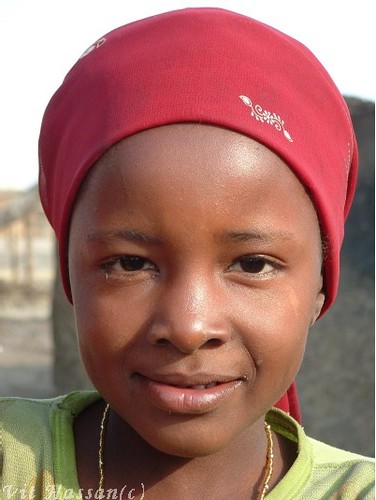
Neur tribe / Malakal, Southern Sudan


Zulu tribe / Africa

Asian/ Korean


 Hispanic/ Ecuador

Greek


Irish

Australian


Spain

Genetic diversity results from independent assortment of chromosomes, random union of sperm and egg, mutations, and crossing over during meiosis.

In 1,000 years, I think we will see even more phenotypes and diversity since people are able to travel so much and genes are able to flow between populations.

Sunday, October 3, 2010

Amphioxus

An amphioxus is also called a lancelet, and it is one member of the phylum Chordata. Lancelets are a member of subphylum Cephalochordata. Evidence points out that they once shared a common ancestor with vertebrates. Although they did not possess a brain, research has shown that the vertebrate brain may have evolved from the lancelet nerve cord. The lancelets live in warm coastal waters and exhibit filter feeding. They are only about 3 inches long and spend much of their time burrowing in the mud. Amphioxus show the three characteristics of Chordata: gill splits, a notochord, and a dorsal nerve cord.
http://www.britannica.com/EBchecked/topic/21580/amphioxus

Here is a picture:

http://www.google.com/imgres?imgurl=http://cas.bellarmine.edu/tietjen/Laboratories/Bio%2520Pix%25204%2520U/Image4.gif&imgrefurl=http://cas.bellarmine.edu/tietjen/images/cephalochordates.htm&usg=__e-e6Ft0hKvq62hPoehxiBL5p6E0=&h=588&w=1013&sz=37&hl=en&start=0&zoom=1&tbnid=Q1HvPNZPs53IvM:&tbnh=105&tbnw=181&prev=/images%3Fq%3Damphioxus%26um%3D1%26hl%3Den%26sa%3DN%26biw%3D1276%26bih%3D604%26tbs%3Disch:1&um=1&itbs=1&iact=rc&dur=639&ei=Y0ypTLipJsH68AaTsam0DA&oei=Y0ypTLipJsH68AaTsam0DA&esq=1&page=1&ndsp=18&ved=1t:429,r:4,s:0&tx=103&ty=76